Neon Cuckoo Bee
Thyreus nitidulus
Exoskeletal Armor
To survive the wrath of a returning host bee, the Neon Cuckoo has a notoriously thick cuticle. Its body is a tank, designed to withstand stings and bites during nest invasions.
Structural Blue "Glow"
The brilliant blue spots are not caused by pigment. Instead, they are created by plumose hairs (setae) that have a "glowing" microscopic structure. This structure reflects light at a specific wavelength, creating a neon sapphire effect.
Chemical Stealth
Research suggests they may use chemical camouflage. By mimicking the scent of the host nest, they can avoid detection by the host's sensitive antennae once they are inside the dark tunnels.
Field notes
| Range | Australia |
|---|---|
| Lifespan | Several months |
| Size | 13 mm to 15 mm |
| Weight | Approximately 0.15 g |
| Colour | Black with Neon Blue Spots |
| Diet | Nectar |
| Family | A cleptoparasitic member of the Apinae subfamily |
In the book
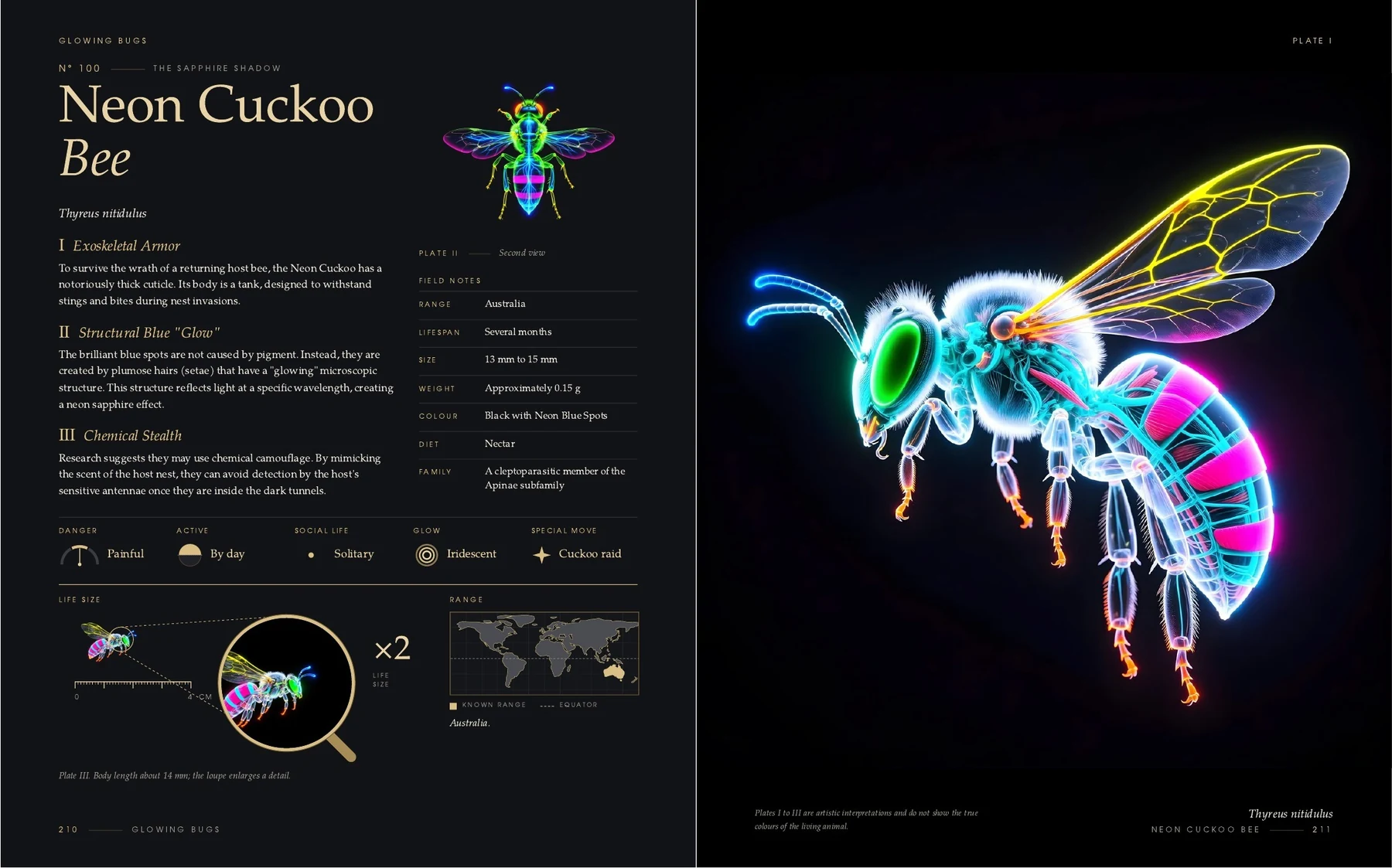
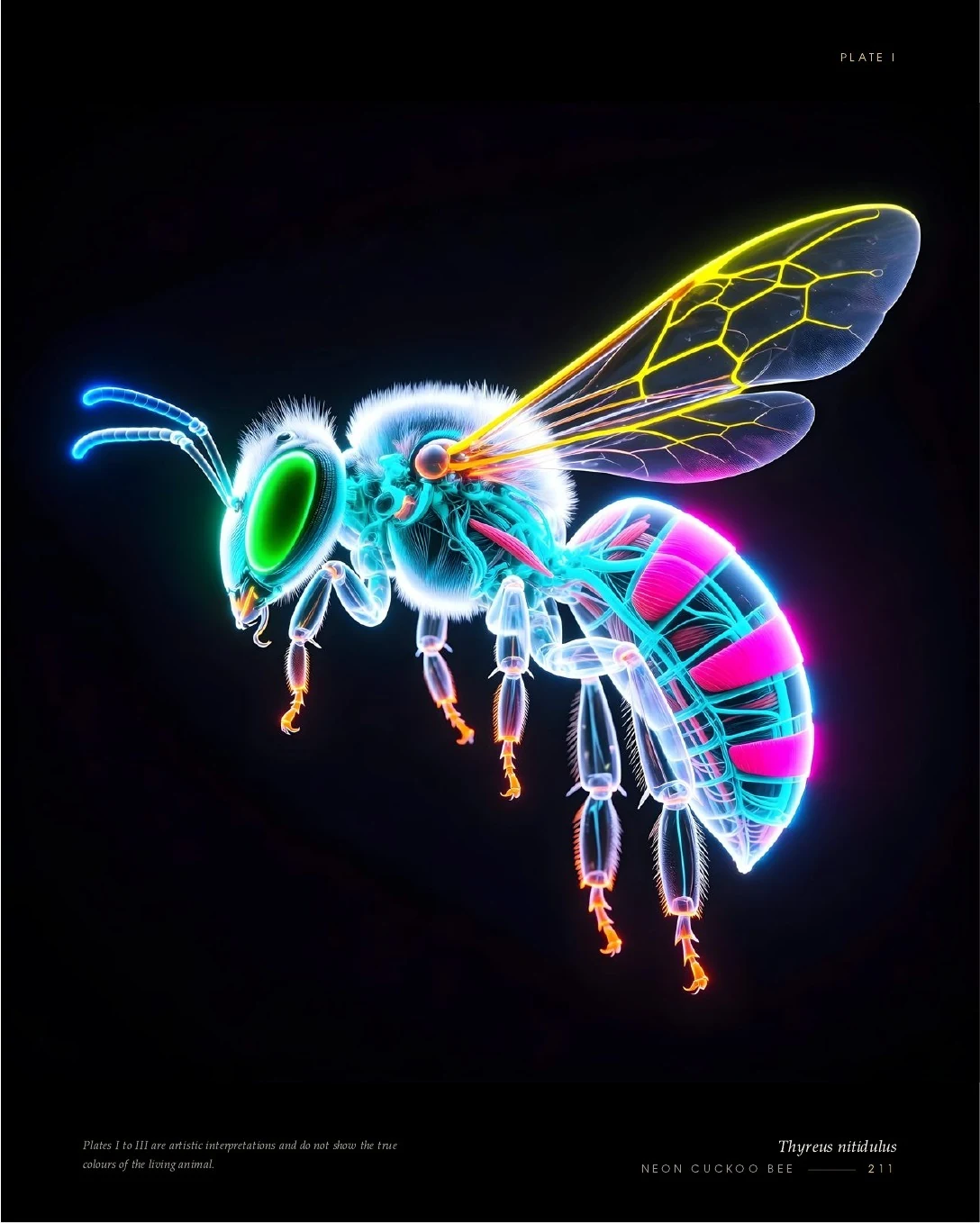
The Neon Cuckoo Bee is number 100 of the 101 creatures in Glowing Bugs. Its two pages show it from three sides, at its true size, with a map of where it lives. The plate is an artistic interpretation and does not show the true colours of the living animal.