Jewel Caterpillar
Acraga coa
Structural Transparency
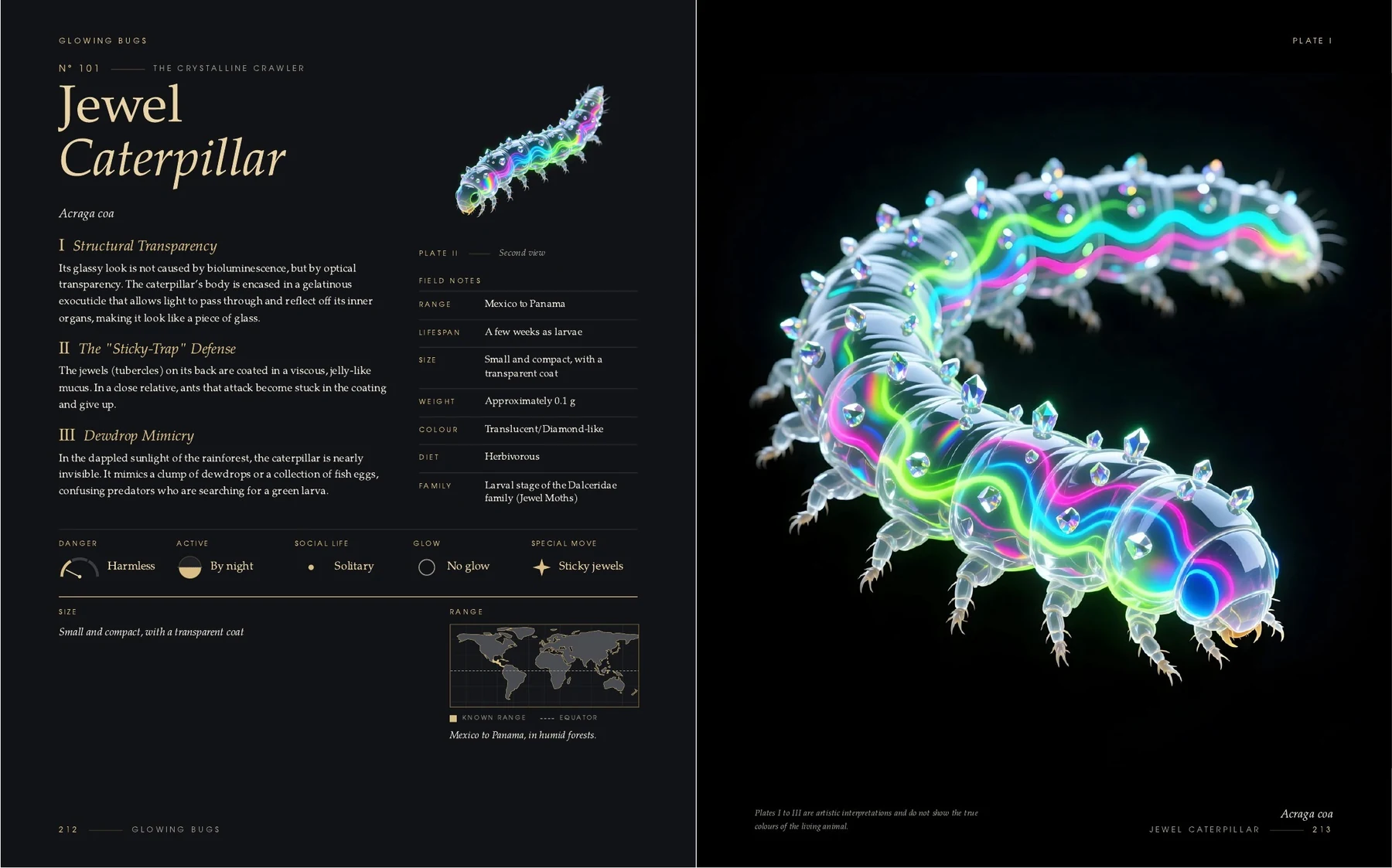
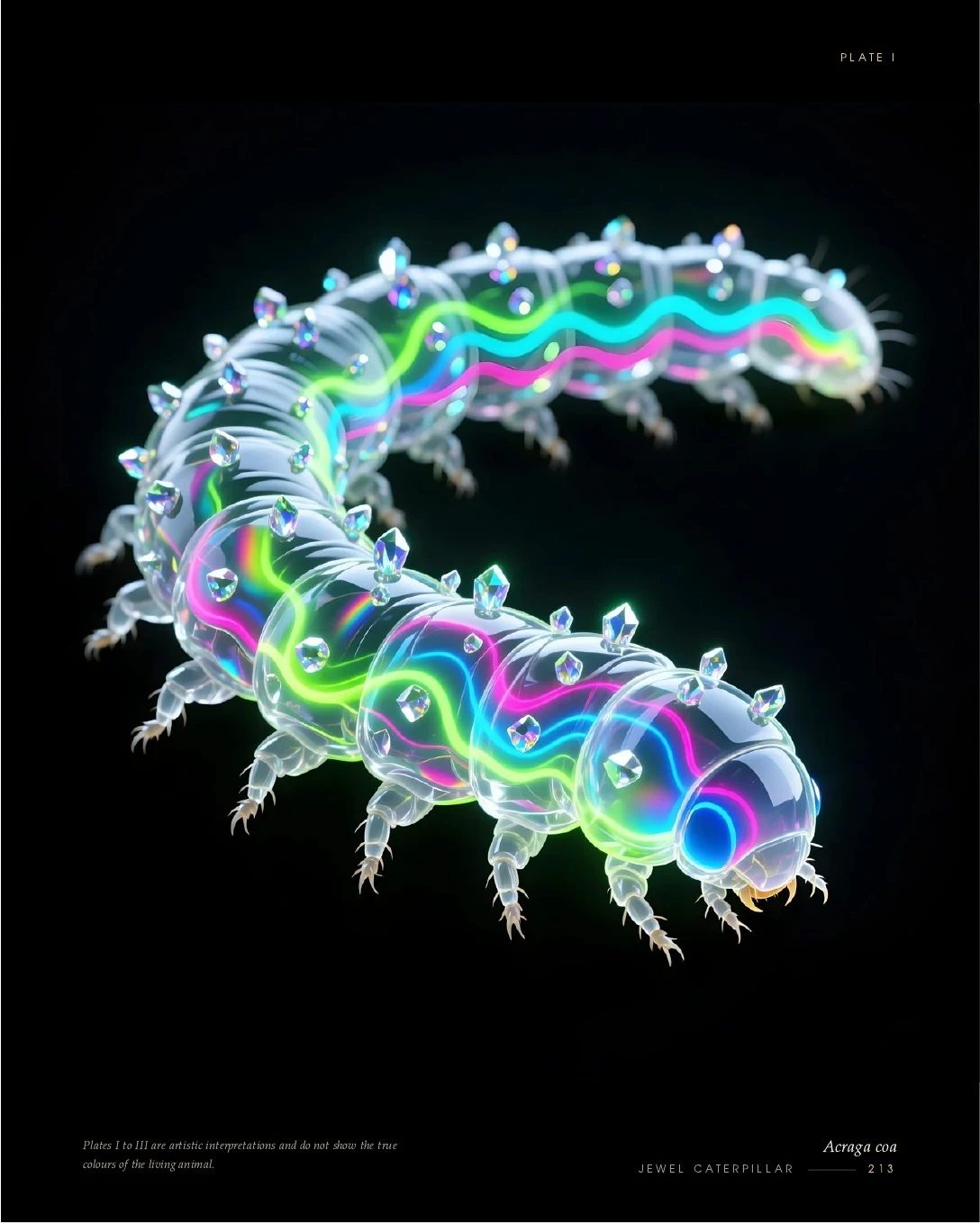
Its glassy look is not caused by bioluminescence, but by optical transparency. The caterpillar’s body is encased in a gelatinous exocuticle that allows light to pass through and reflect off its inner organs, making it look like a piece of glass.
The "Sticky-Trap" Defense
The jewels (tubercles) on its back are coated in a viscous, jelly-like mucus. In a close relative, ants that attack become stuck in the coating and give up.
Dewdrop Mimicry
In the dappled sunlight of the rainforest, the caterpillar is nearly invisible. It mimics a clump of dewdrops or a collection of fish eggs, confusing predators who are searching for a green larva.
Field notes
| Range | Mexico to Panama |
|---|---|
| Lifespan | A few weeks as larvae |
| Size | Small and compact, with a transparent coat |
| Weight | Approximately 0.1 g |
| Colour | Translucent/Diamond-like |
| Diet | Herbivorous |
| Family | Larval stage of the Dalceridae family (Jewel Moths) |
In the book
The Jewel Caterpillar is number 101 of the 101 creatures in Glowing Bugs. Its two pages show it from three sides, at its true size, with a map of where it lives. The plate is an artistic interpretation and does not show the true colours of the living animal.