A science and art exhibition for science centres
Anatomy, colour and living light, made visible
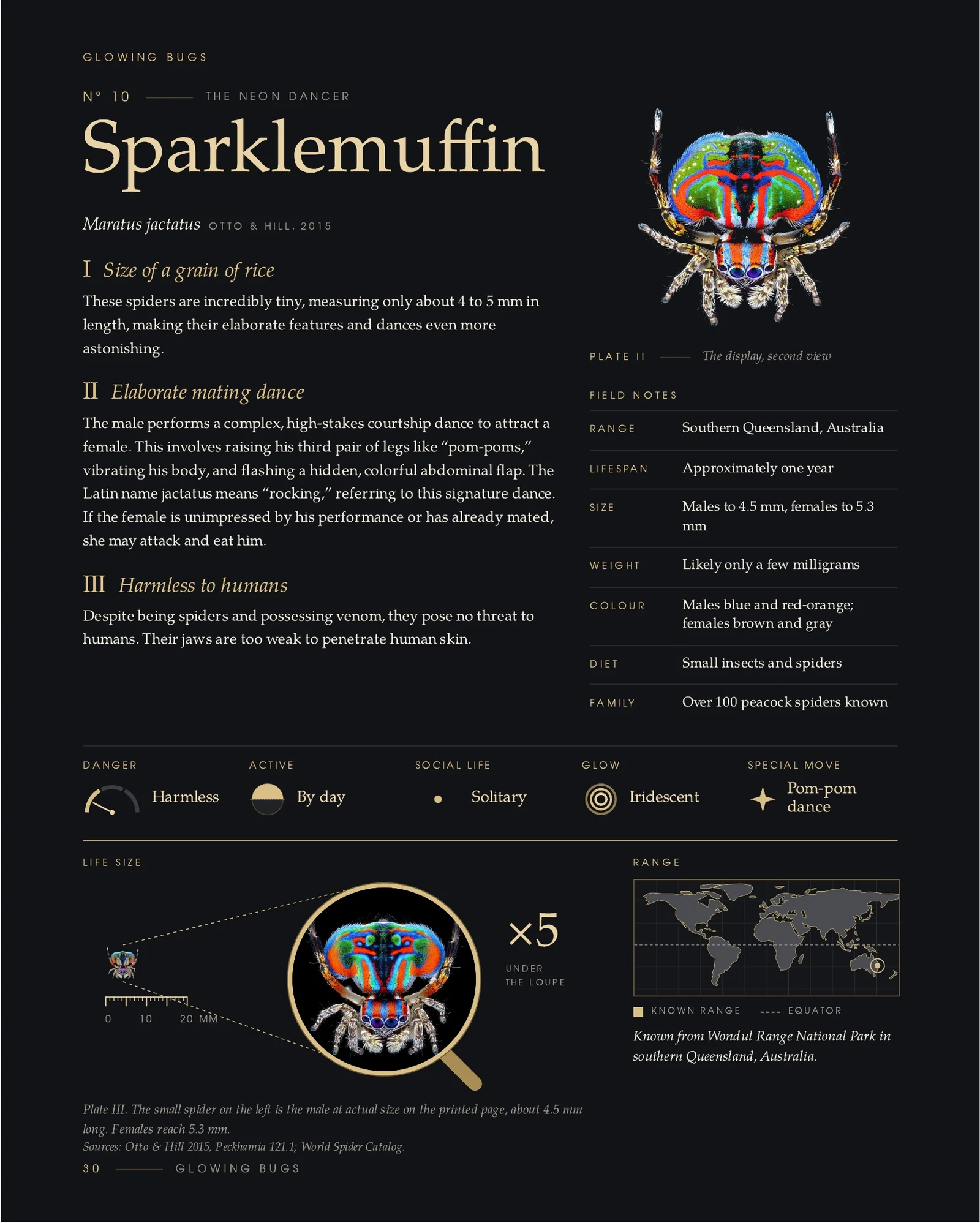
Each creature in Glowing Bugs is drawn as if made of glass and lit from inside, so that its structure can be seen: the segments of a body, the veins of a wing, the joints of a leg. It is science told through pictures, for visitors of every age.
What visitors learn
- How an insect is built: six legs, three body parts, and how spiders, millipedes and others differ
- How colour is made: pigment, and the iridescence that comes from structure
- How living things make light: glow-worms, fireflies and railroad worms
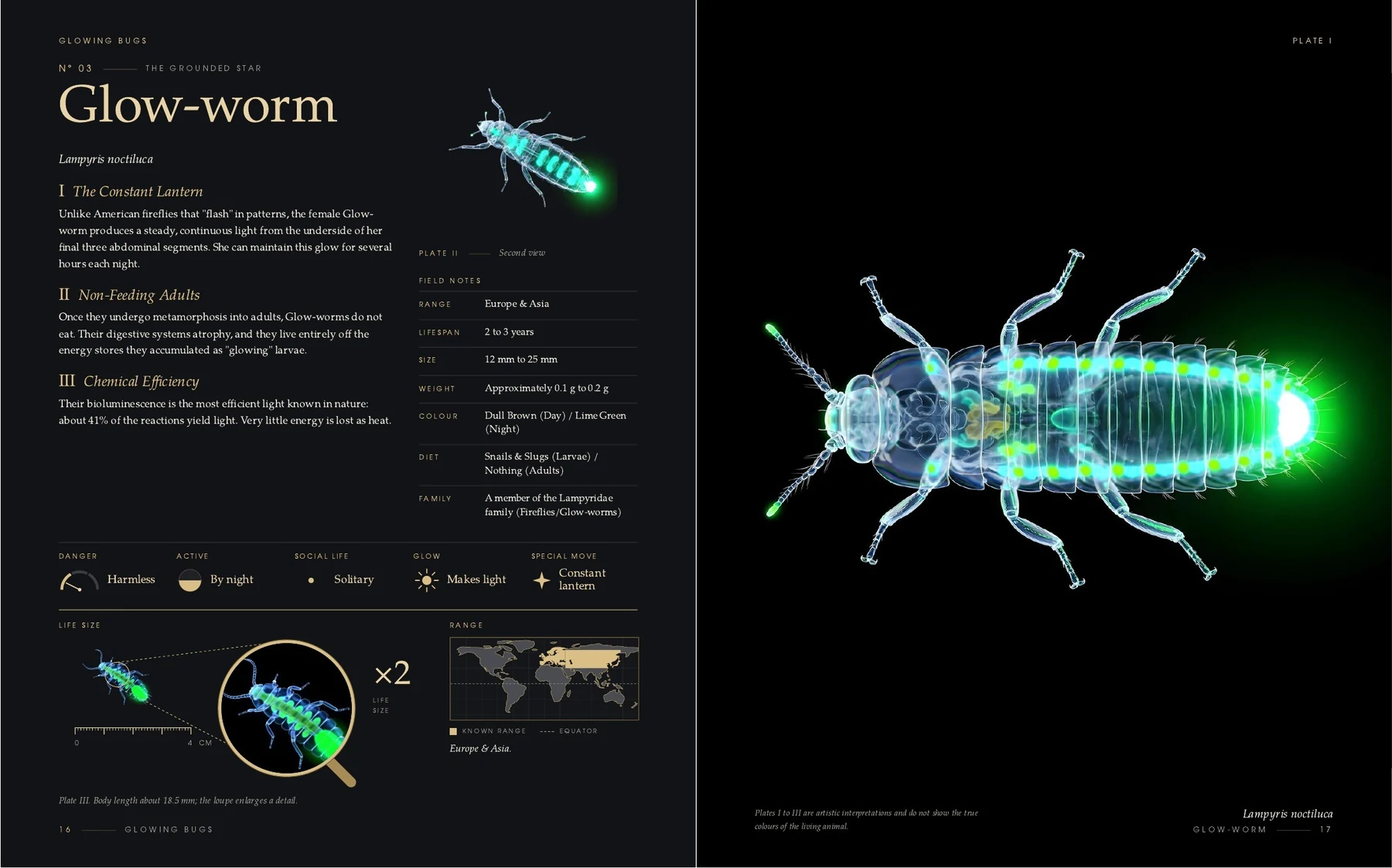
- How small they really are: every creature at its true size beside its enlargement, with the magnification stated
- Where they live: a world map for each
Facts that can be trusted
Every fact in the exhibition is traced to a source: scientific papers, museums and universities, and for the dangerous species the health authorities. Scientific names are given with their authors and year.
Made for families and school groups
Short texts, large pictures, and a dark room that glows. The exhibition works for a five-year-old and for a biology teacher. The companion book, Most Dangerous Bugs, covers twenty-four creatures that bite, sting and carry disease.
Sizes
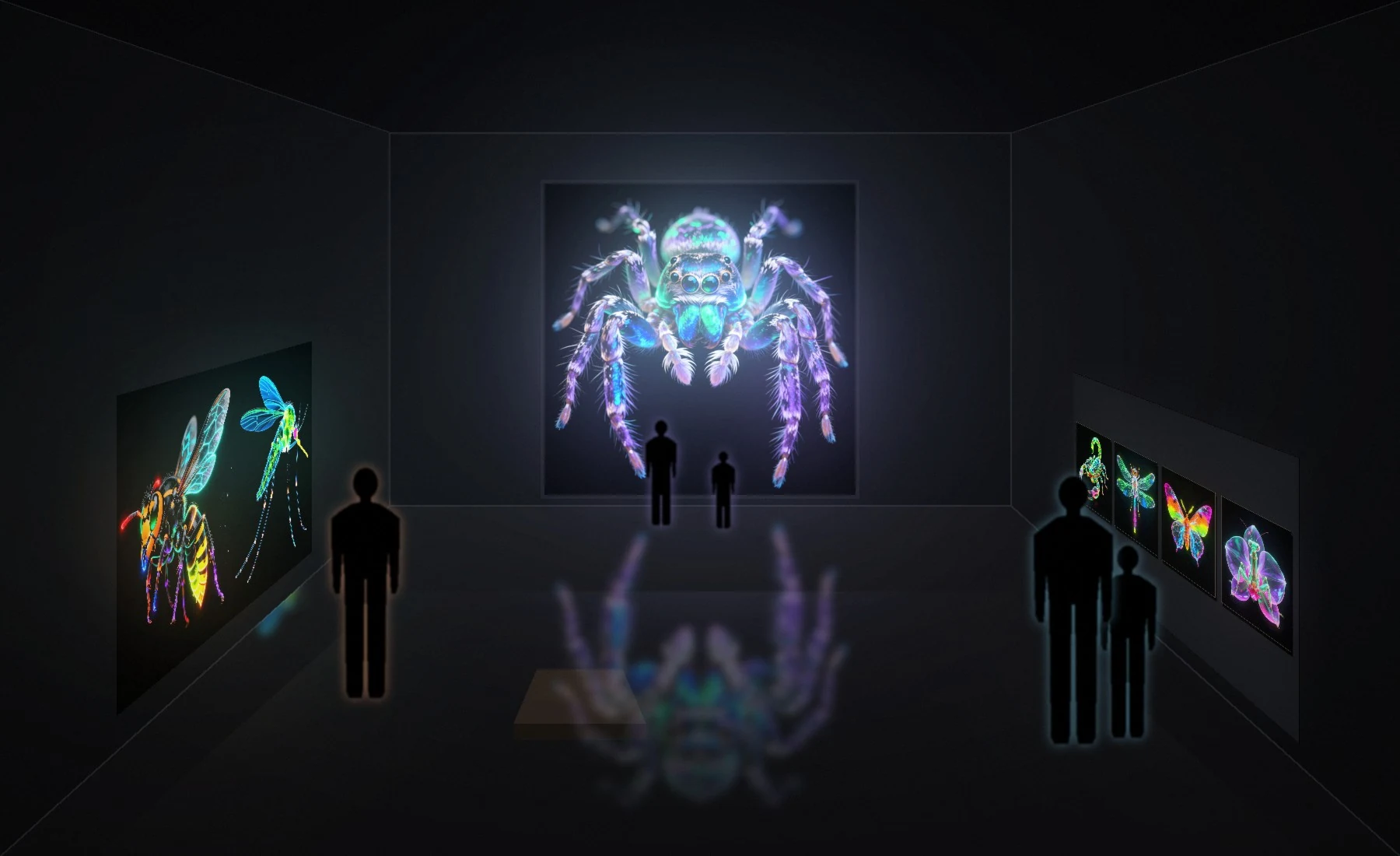
From a room of 100 square metres to a hall of 900, each with a floor plan and a visitor route, and with lightboxes three metres high where the ceiling allows.
Questions
Is the content scientifically accurate?
The facts are sourced and the anatomy of every plate was reviewed against the real animal. The pictures themselves are artistic interpretations, and the exhibition states this.
Is there material for school visits?
The exhibition texts are written for young readers, and the two books support a visit. Worksheets can be prepared with the venue.
Does it need a dark room?
The lightboxes look best in a dimmed or dark space. The prints can hang in an ordinary lit room.
The presentation
The full exhibition presentation, with floor plans and views for each size of venue, is free to download.
PDF · 24 pages · 2.7 MB