Tarantula Hawk
Genus Pepsis or Genus Hemipepsis
Second Most Painful Sting
The sting of the Tarantula Hawk is ranked second on the Schmidt Sting Pain Index (only behind the Bullet Ant).
Specialized Hunters
The female wasp is an obligate parasitoid: she must hunt a tarantula to reproduce. Different species of the wasp often specialize in hunting specific species of tarantulas.
Warning Colors (Aposematism)
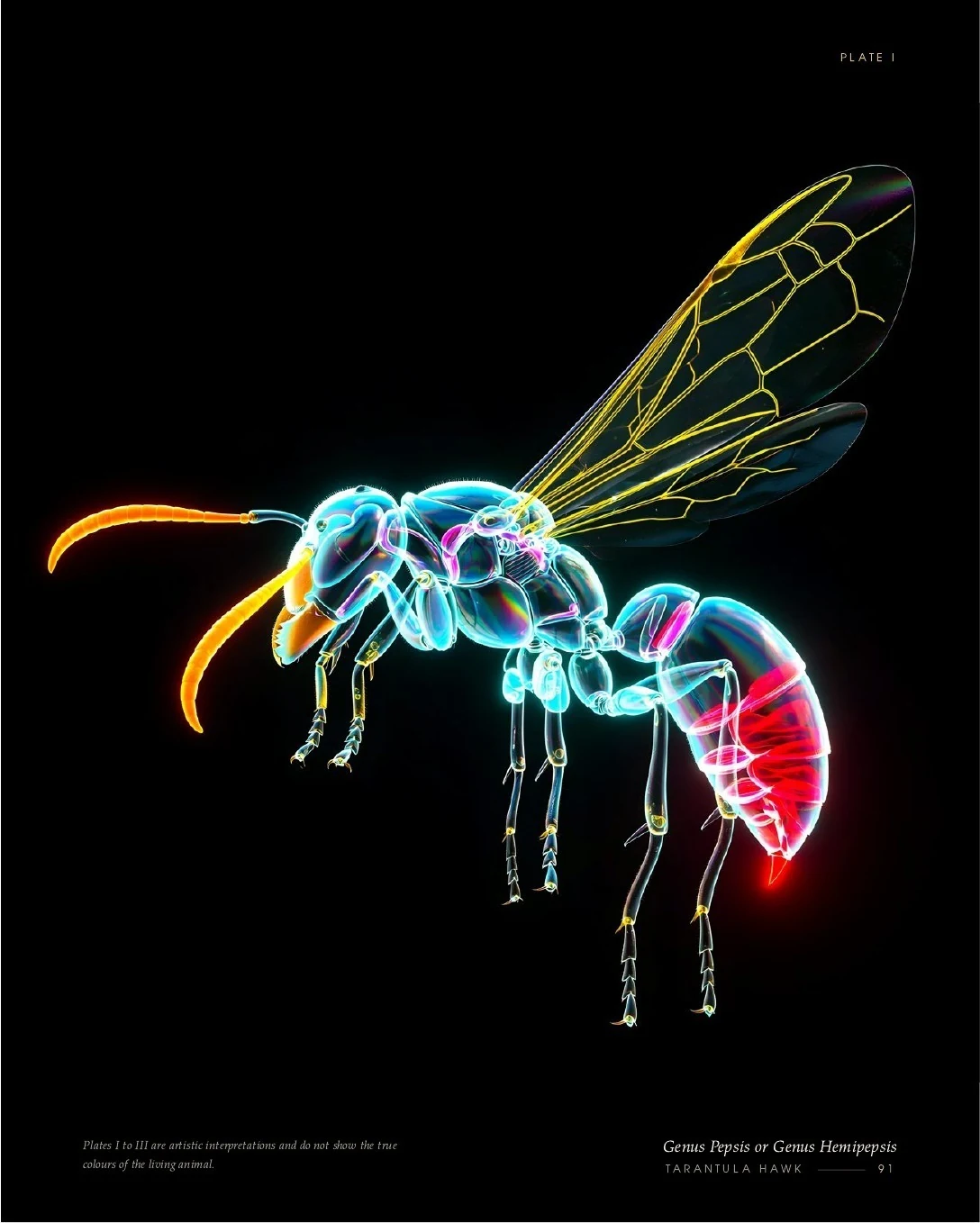
The wasp's vivid metallic blue-black body and bright, rusty-orange wings are a textbook example of aposematism (warning coloration), signaling its toxicity and extreme pain to potential predators.
Field notes
| Range | Deserts, grasslands and shrublands of the Americas |
|---|---|
| Lifespan | Complete Life Cycle: Approximately 1 year |
| Size | About 5 cm; the largest species reach 11 cm |
| Weight | A few hundred milligrams to about 1 gram |
| Colour | Metallic blue-black body, rusty-orange wings |
| Diet | Adults: Nectar and pollen |
| Family | Well over 130 species in two genera |
In the book
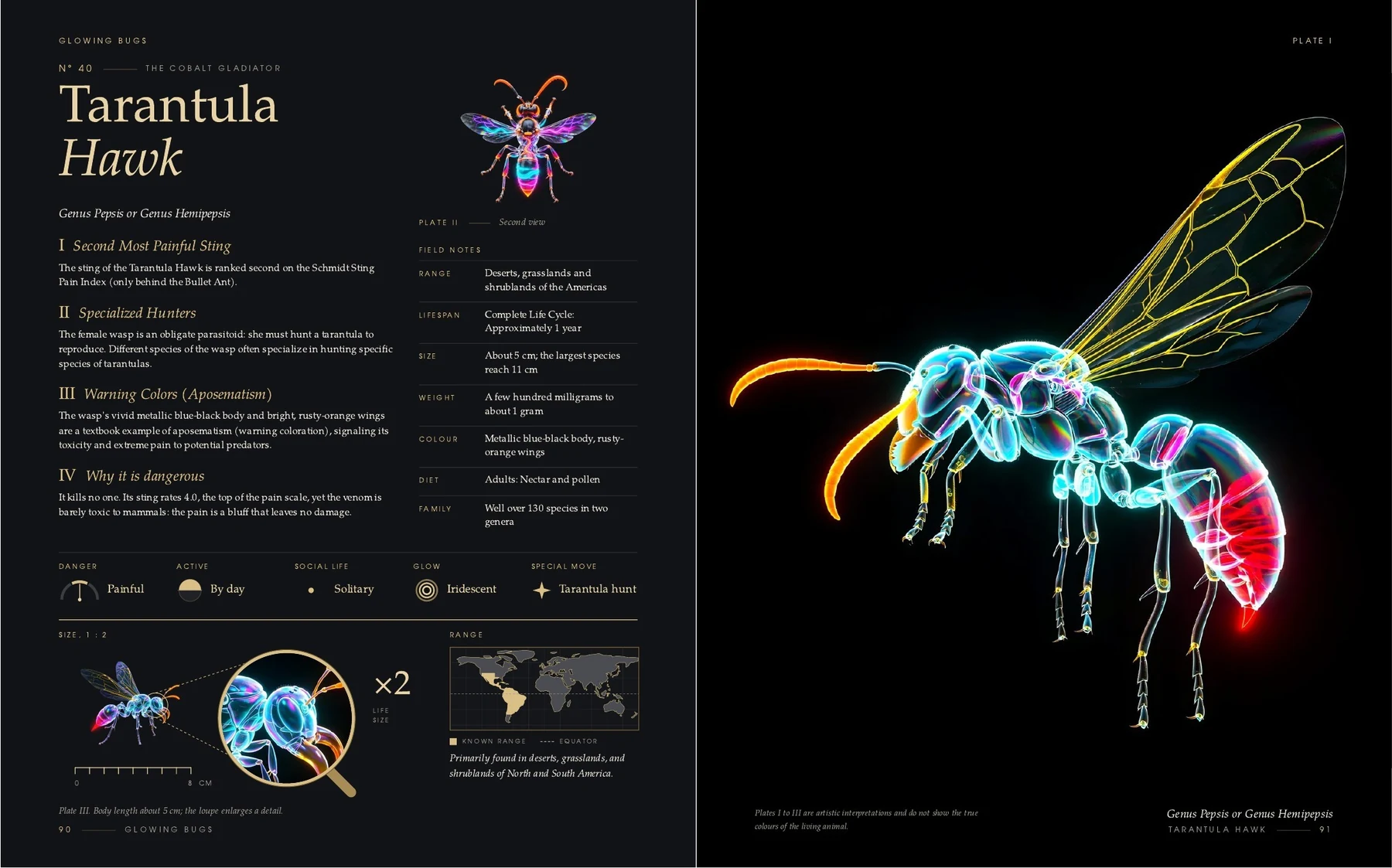
The Tarantula Hawk is number 40 of the 101 creatures in Glowing Bugs. Its two pages show it from three sides, at its true size, with a map of where it lives. The plate is an artistic interpretation and does not show the true colours of the living animal.