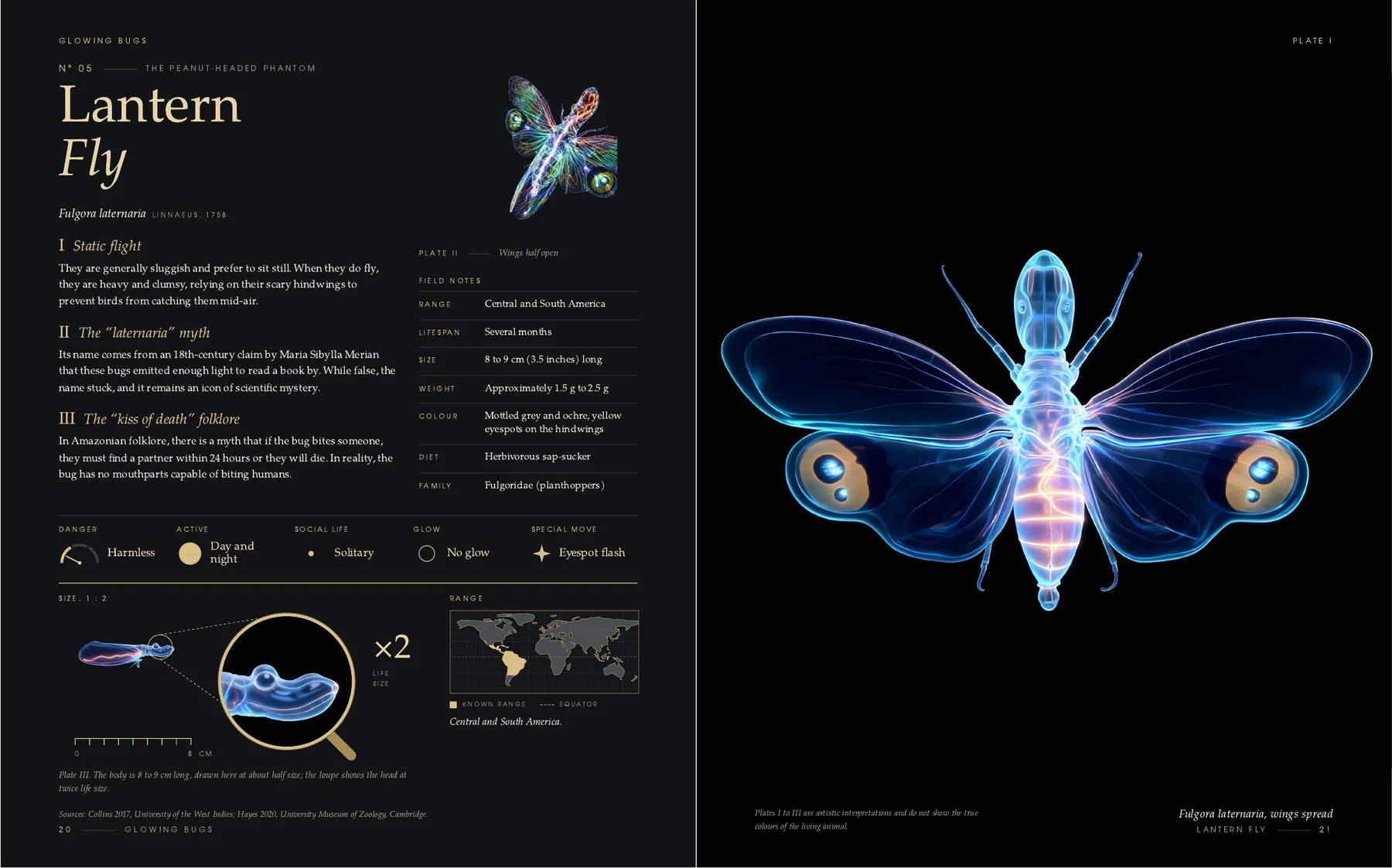
Lantern Fly
Fulgora laternaria Linnaeus, 1758
Static flight
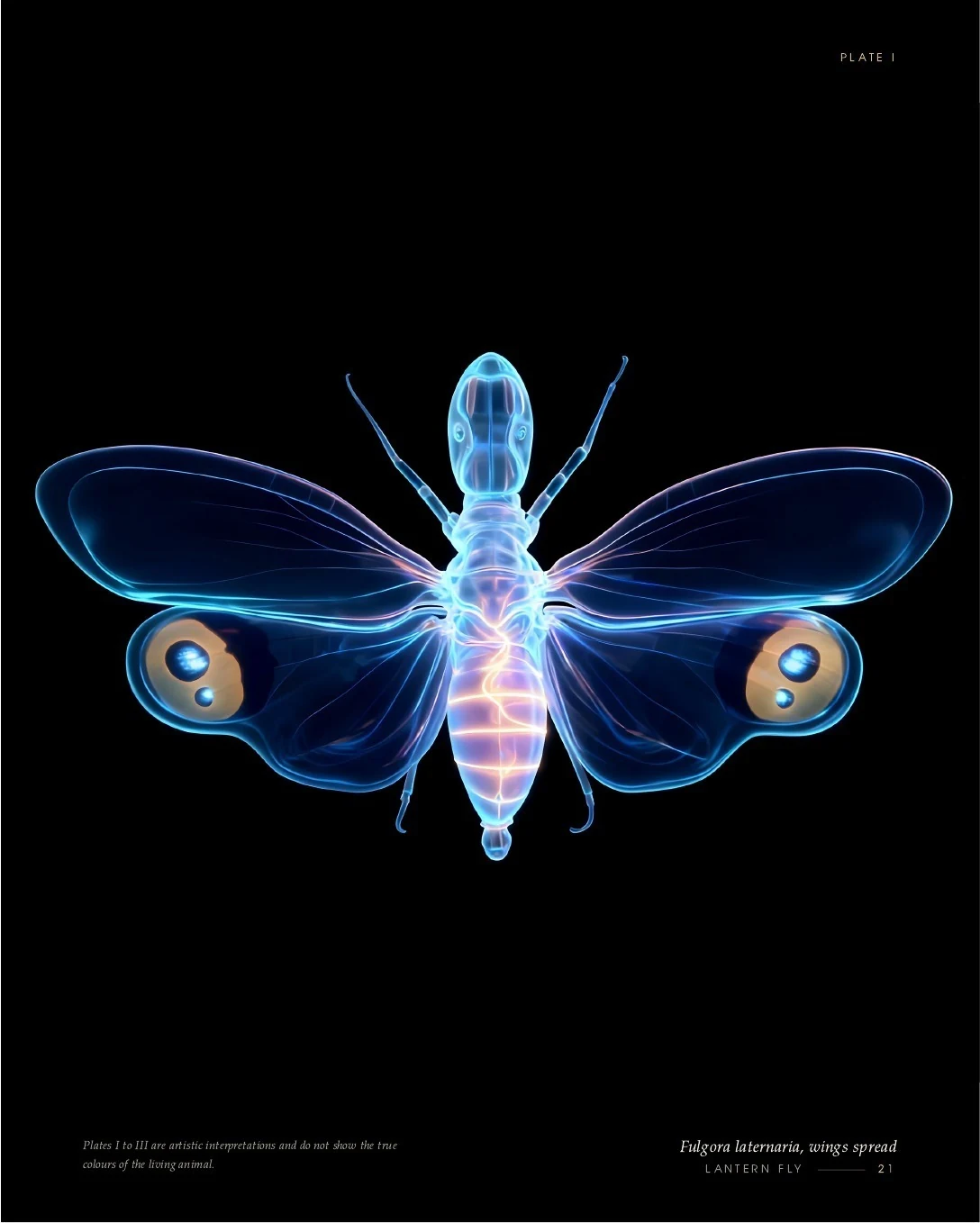
They are generally sluggish and prefer to sit still. When they do fly, they are heavy and clumsy, relying on their scary hindwings to prevent birds from catching them mid-air.
The “laternaria” myth
Its name comes from an 18th-century claim by Maria Sibylla Merian that these bugs emitted enough light to read a book by. While false, the name stuck, and it remains an icon of scientific mystery.
The “kiss of death” folklore
In Amazonian folklore, there is a myth that if the bug bites someone, they must find a partner within 24 hours or they will die. In reality, the bug has no mouthparts capable of biting humans.
Field notes
| Range | Central and South America |
|---|---|
| Lifespan | Several months |
| Size | 8 to 9 cm (3.5 inches) long |
| Weight | Approximately 1.5 g to 2.5 g |
| Colour | Mottled grey and ochre, yellow eyespots on the hindwings |
| Diet | Herbivorous sap-sucker |
| Family | Fulgoridae (planthoppers) |
In the book
The Lantern Fly is number 5 of the 101 creatures in Glowing Bugs. Its two pages show it from three sides, at its true size, with a map of where it lives. The plate is an artistic interpretation and does not show the true colours of the living animal.