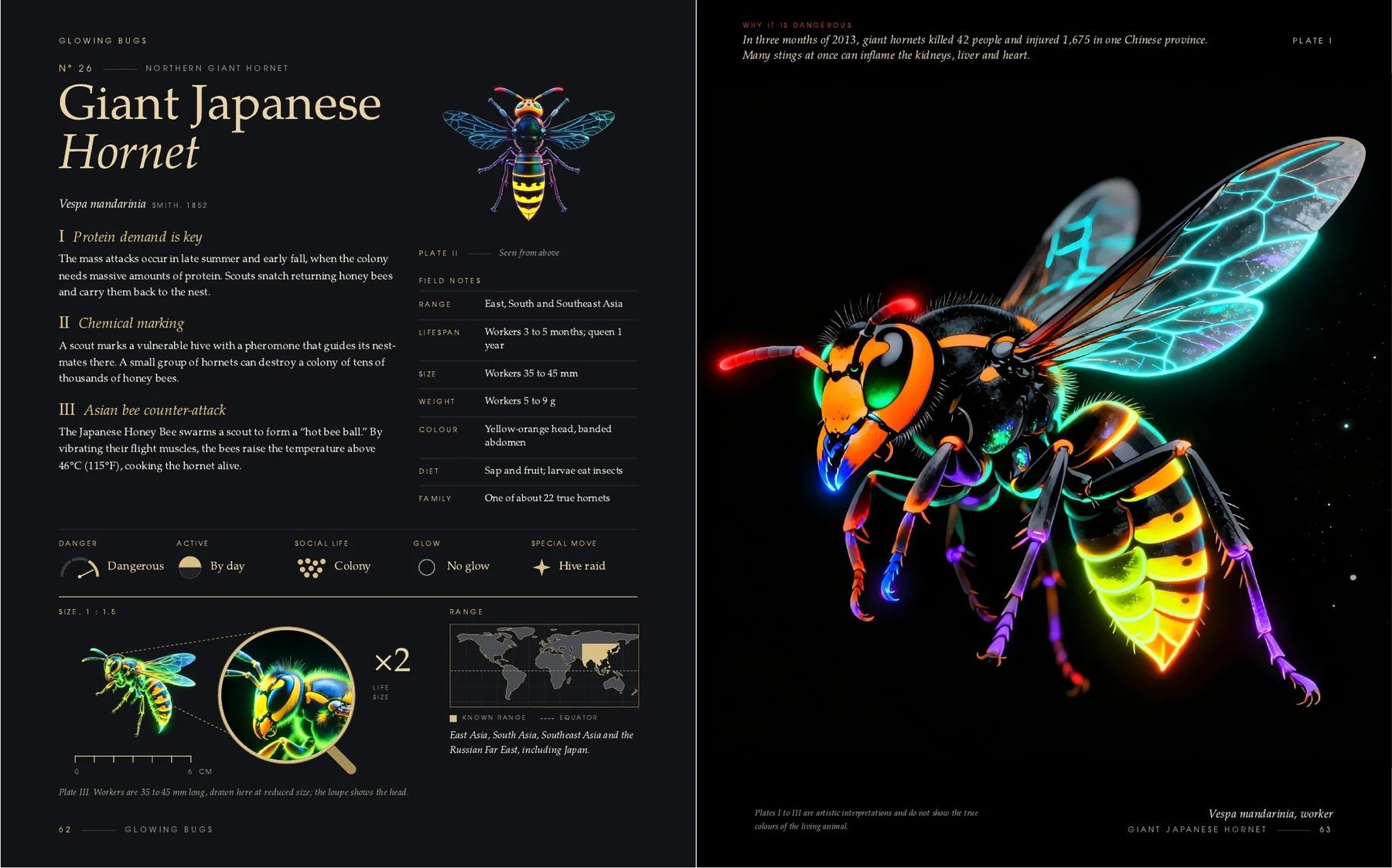
Giant Japanese Hornet
Vespa mandarinia Smith, 1852
Protein demand is key
The mass attacks occur in late summer and early fall, when the colony needs massive amounts of protein. Scouts snatch returning honey bees and carry them back to the nest.
Chemical marking
A scout marks a vulnerable hive with a pheromone that guides its nest-mates there. A small group of hornets can destroy a colony of tens of thousands of honey bees.
Asian bee counter-attack
The Japanese Honey Bee swarms a scout to form a “hot bee ball.” By vibrating their flight muscles, the bees raise the temperature above 46°C (115°F), cooking the hornet alive.
Field notes
| Range | East, South and Southeast Asia |
|---|---|
| Lifespan | Workers 3 to 5 months; queen 1 year |
| Size | Workers 35 to 45 mm |
| Weight | Workers 5 to 9 g |
| Colour | Yellow-orange head, banded abdomen |
| Diet | Sap and fruit; larvae eat insects |
| Family | One of about 22 true hornets |
In the book
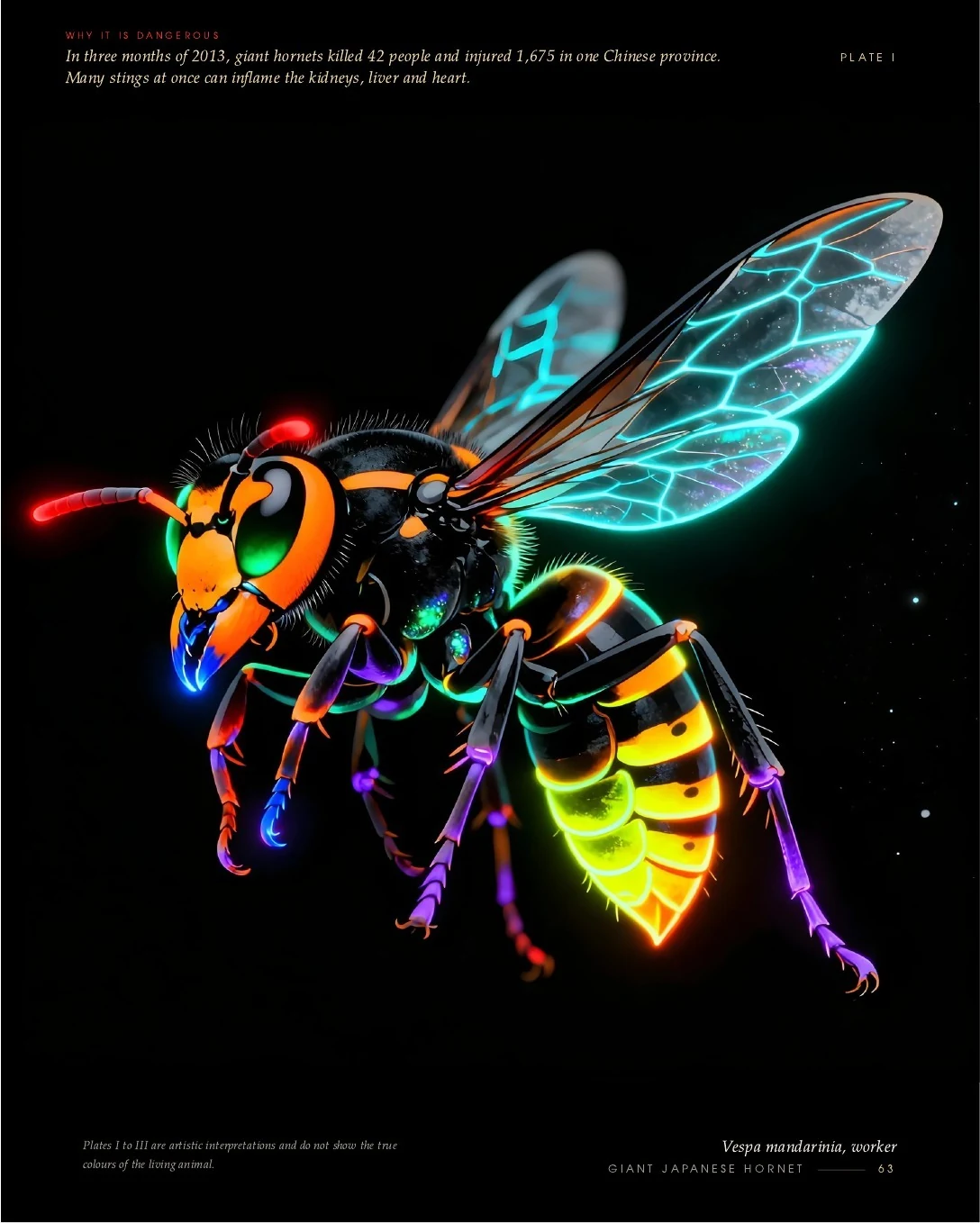
The Giant Japanese Hornet is number 26 of the 101 creatures in Glowing Bugs. Its two pages show it from three sides, at its true size, with a map of where it lives. The plate is an artistic interpretation and does not show the true colours of the living animal.