Fire Ant
Solenopsis invicta
Unique Two-Part Attack
The fire ant's attack is a two-step process: they bite with their mandibles to anchor themselves to the skin, then rotate on the spot, stinging repeatedly in a circular pattern.
Multi-Queen Colonies
Some fire ant colonies exist in a polygyne form, meaning they have multiple reproductive queens (sometimes hundreds in a single mound).
Devastating Ecological Impact
As aggressive invaders, they attack and kill native wildlife, including ground-nesting birds, frogs, lizards, and newborn small mammals, severely reducing biodiversity in invaded areas.
Field notes
| Range | Native: South America (Brazil, Argentina, Uruguay) |
|---|---|
| Lifespan | Workers: 6 to 8 weeks (active season) |
| Size | Workers 2 to 6 mm; the queen is larger |
| Weight | Workers under 1 milligram |
| Colour | Reddish-brown to copper-brown on the head and thorax |
| Diet | Highly Omnivorous |
| Family | The genus Solenopsis contains over 200 species |
In the book
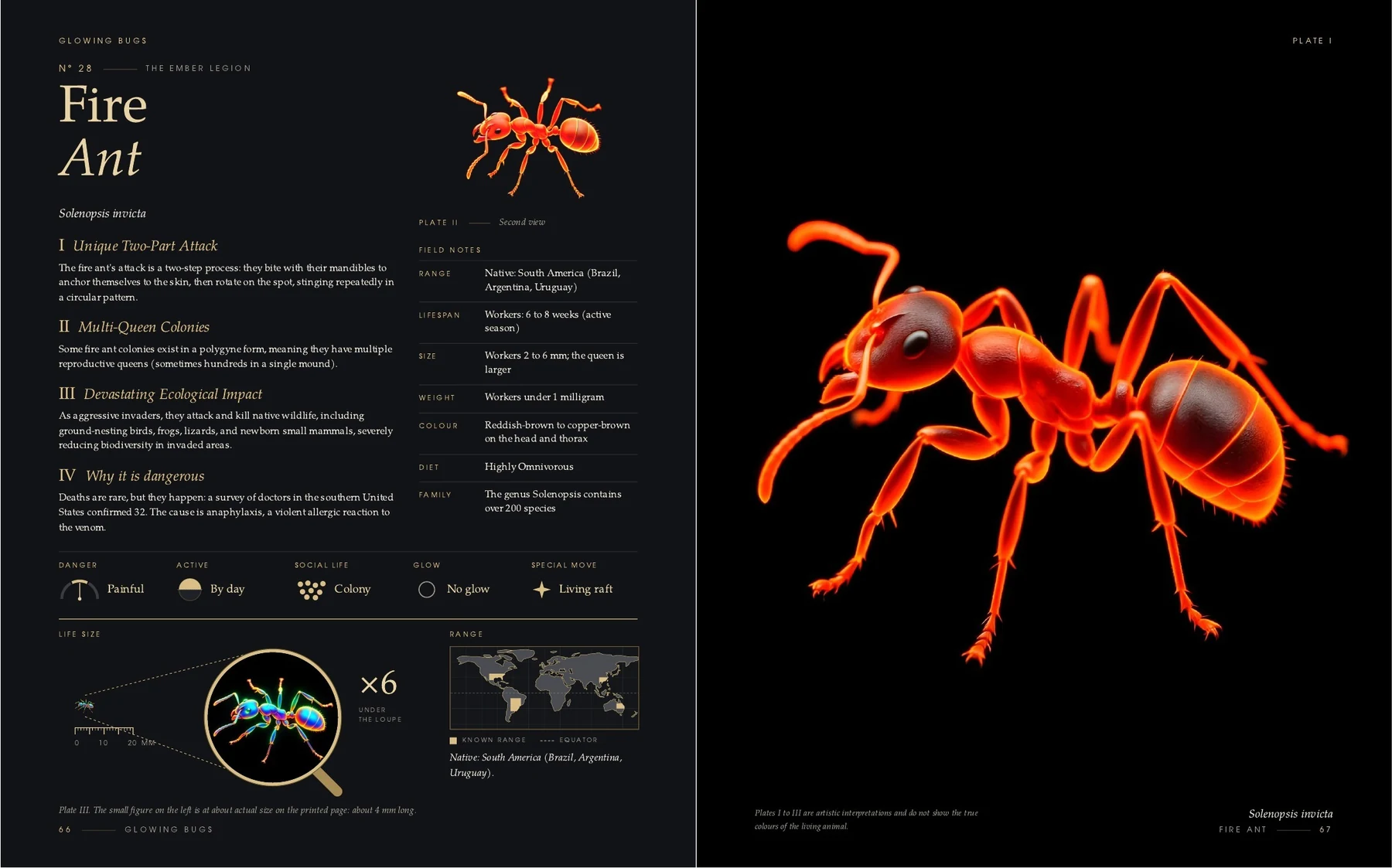
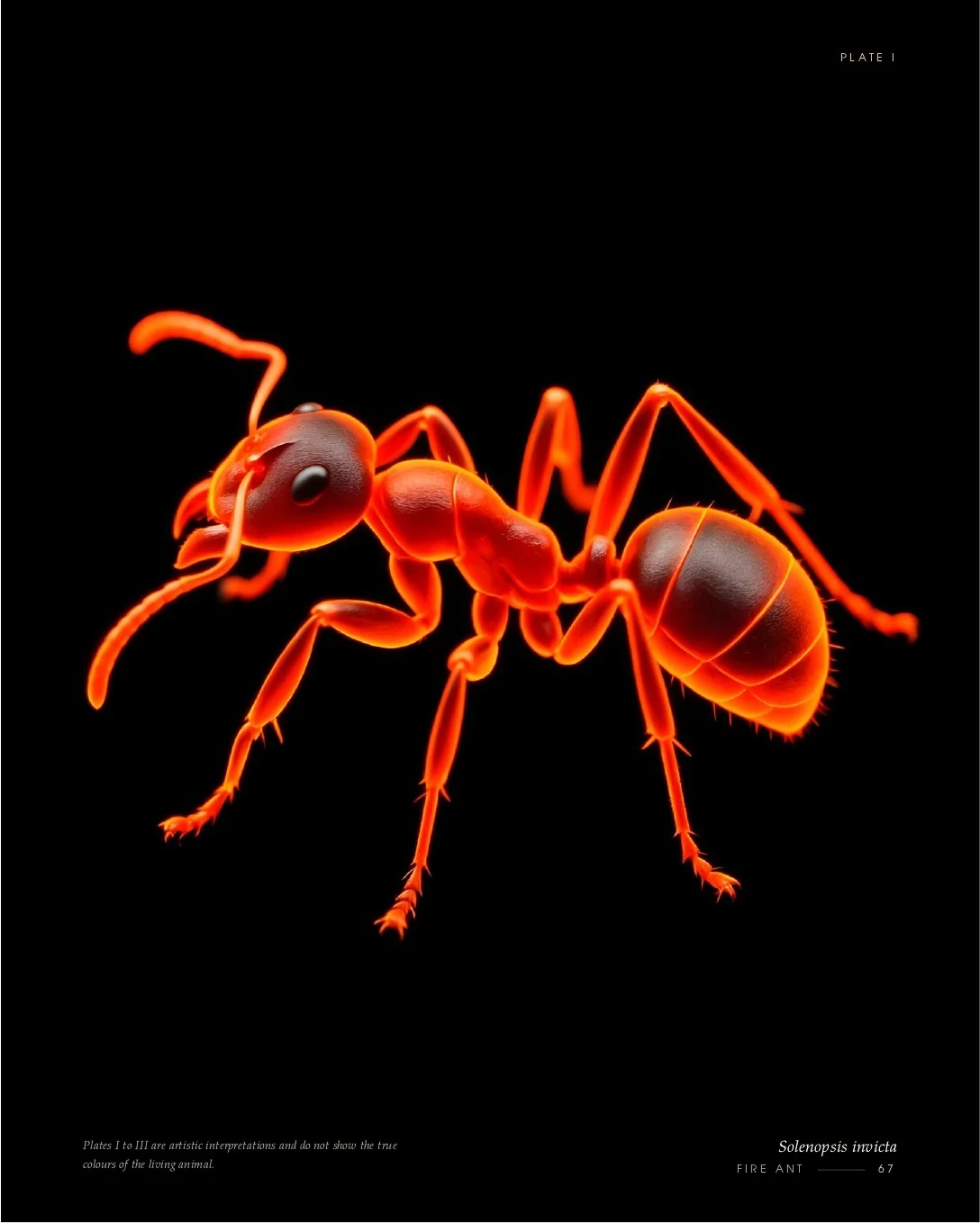
The Fire Ant is number 28 of the 101 creatures in Glowing Bugs. Its two pages show it from three sides, at its true size, with a map of where it lives. The plate is an artistic interpretation and does not show the true colours of the living animal.