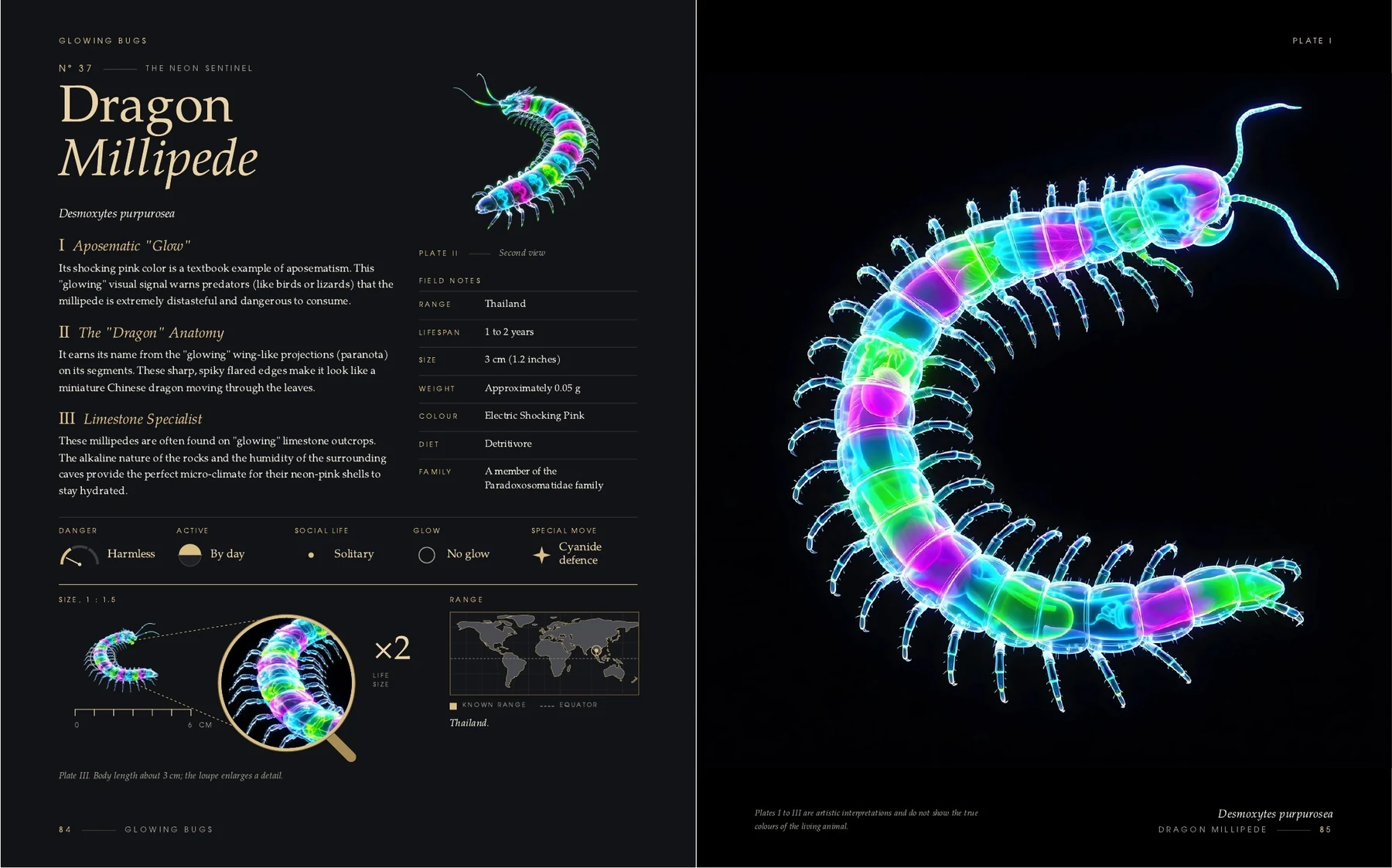
Dragon Millipede
Desmoxytes purpurosea
Aposematic "Glow"
Its shocking pink color is a textbook example of aposematism. This "glowing" visual signal warns predators (like birds or lizards) that the millipede is extremely distasteful and dangerous to consume.
The "Dragon" Anatomy
It earns its name from the "glowing" wing-like projections (paranota) on its segments. These sharp, spiky flared edges make it look like a miniature Chinese dragon moving through the leaves.
Limestone Specialist
These millipedes are often found on "glowing" limestone outcrops. The alkaline nature of the rocks and the humidity of the surrounding caves provide the perfect micro-climate for their neon-pink shells to stay hydrated.
Field notes
| Range | Thailand |
|---|---|
| Lifespan | 1 to 2 years |
| Size | 3 cm (1.2 inches) |
| Weight | Approximately 0.05 g |
| Colour | Electric Shocking Pink |
| Diet | Detritivore |
| Family | A member of the Paradoxosomatidae family |
In the book
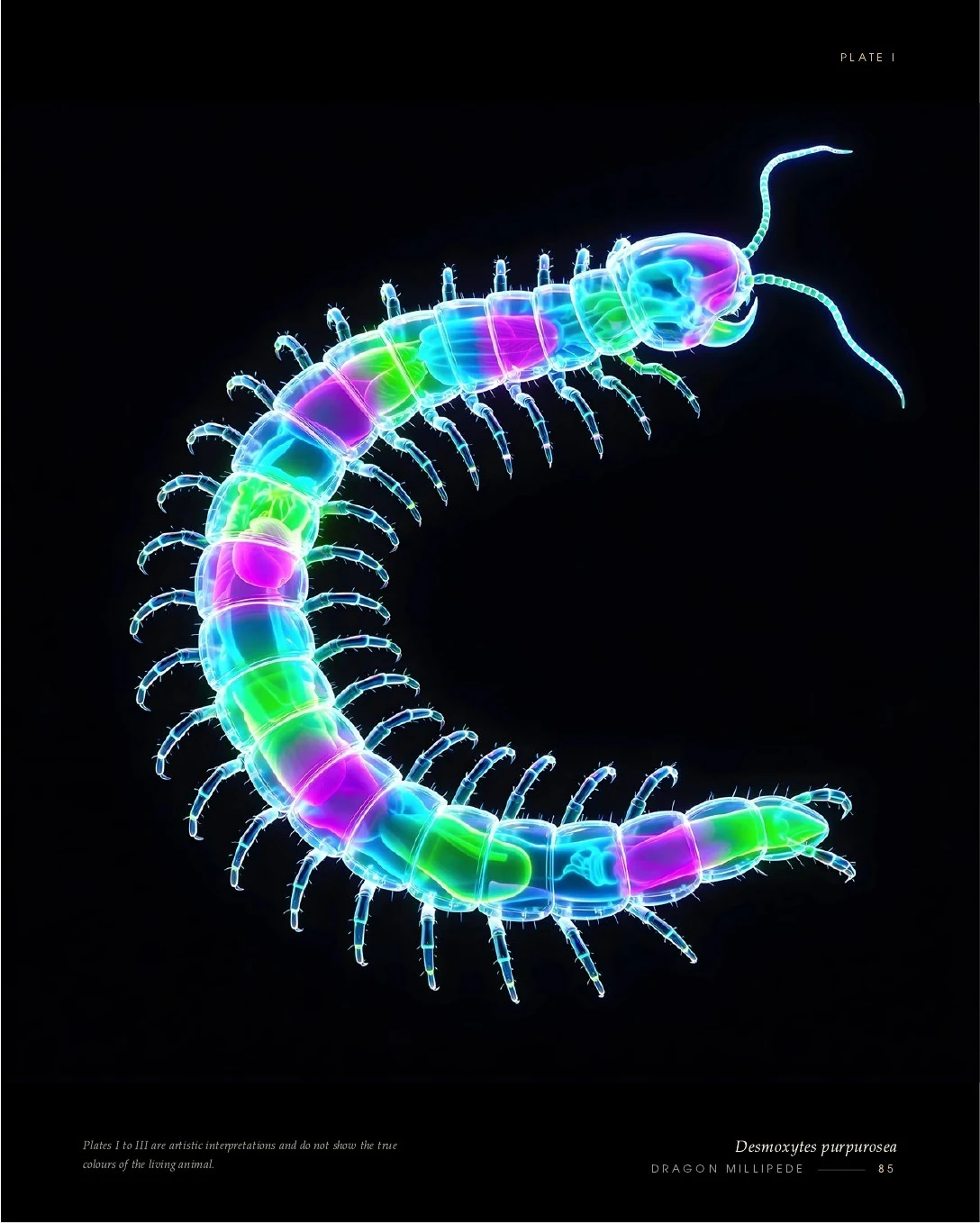
The Dragon Millipede is number 37 of the 101 creatures in Glowing Bugs. Its two pages show it from three sides, at its true size, with a map of where it lives. The plate is an artistic interpretation and does not show the true colours of the living animal.